Hey there! As a supplier of paper sheet machines, I've seen firsthand how these amazing pieces of equipment can transform the paper-making process. In this blog, I'm gonna break down the main components of a paper sheet machine, so you can get a better understanding of how they work and what makes them so essential in the paper industry.
Feeding System
The feeding system is the starting point of the whole paper sheet - making process. It's like the gateway that allows raw materials to enter the machine. This system generally includes a hopper, where the pulp (the raw material for paper - making) is stored. The pulp is usually a mixture of water and cellulose fibers, which can come from wood, recycled paper, or other plant sources.


There's also a conveyor belt in this part. The conveyor is responsible for moving the pulp from the hopper towards the next stage of the process at a controlled speed. It ensures a continuous and steady flow of pulp, which is crucial for producing uniform paper sheets.
Headbox
Next up is the headbox. This is a super - important component as it's where the pulp is precisely distributed onto the forming section. The headbox controls the speed, consistency, and distribution of the pulp across the width of the machine.
It has a series of nozzles and flow regulators. These help to spread the pulp evenly, so that the thickness of the paper sheet is consistent throughout. A well - functioning headbox is vital for making high - quality paper sheets with a smooth texture.
Forming Section
The forming section is where the magic starts to happen. Here, the pulp begins to transform from a wet, messy mixture into a more solid paper - like structure. The main part of this section is the wire mesh screen.
As the pulp is deposited on the wire mesh, excess water starts to drain away through the tiny holes in the mesh. This process is facilitated by gravity and sometimes by vacuum boxes located beneath the wire. The movement of the wire also helps to further align the cellulose fibers in the pulp, which gives the paper its strength and structure.
Press Section
After the forming section, the still - wet paper sheet moves into the press section. This is where the bulk of the remaining water is removed from the paper. The press section consists of a series of press rolls.
These rolls apply pressure to the paper sheet, squeezing out the water. They're often covered with felt, which absorbs the water as it's pressed out. The felt needs to be regularly cleaned and maintained to ensure efficient water removal. The pressure applied by the rolls can be adjusted depending on the type of paper being produced. For example, thicker papers may require more pressure to remove the extra water.
Drying Section
Once the paper sheet has passed through the press section, it's still quite damp. That's where the drying section comes in. This section is made up of a series of drying cylinders.
The drying cylinders are heated, usually with steam. As the paper sheet passes over these cylinders, the heat evaporates the remaining water. The temperature and the speed at which the paper passes through the drying section are carefully controlled. If the drying process is too fast, the paper may become brittle; if it's too slow, the production process will be inefficient.
Calendering Section
After the paper is dried, it goes through the calendering section. This is where the paper gets a smooth finish and a more uniform thickness. The calendering section is made up of a stack of hard - surfaced rolls.
As the paper passes between these rolls, they apply pressure to the sheet, flattening out any irregularities. This gives the paper a glossy or matte finish, depending on the type of rolls used. Calendering also improves the paper's printability, making it better for use in various printing applications.
Reeling Section
The final major component of a paper sheet machine is the reeling section. Here, the finished paper sheet is wound onto a large roll. This roll can then be further processed, such as being cut into smaller sheets or used for continuous - feed applications.
The reeling section has a set of rollers that guide the paper onto the reel. The tension of the paper as it's being wound is carefully controlled to ensure a tight and even roll. A well - wound roll is easier to handle and transport, and it also helps in maintaining the quality of the paper.
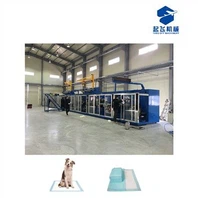
Now, while we're on the topic of machines, I'd also like to mention a few other related machines that we have in our product line. If you're interested in other types of manufacturing machines, check out our Tray Soak Pad Machine, Pet Training Pad Making Machine, and Panty Liner Making Machine.
If you're in the market for a paper sheet machine or any of the machines I've mentioned, I'd love to have a chat with you. Whether you're a small business just starting out or a large - scale manufacturer looking to upgrade your equipment, we can find the right solution for you. Don't hesitate to reach out and start a conversation about your specific needs.
References
- "Paper Machine Technology Handbook" by John G. Casey
- "The Pulp and Paper Industry: Processes, Products, and Opportunities" by the American Forest & Paper Association