1. Global Market Landscape and Equipment Demand Drivers for Two Core Categories
1.1 Disposable Underpads (Maternity Bed Pads) Market and Equipment Overview
Disposable Underpads are one of the fastest-growing categories in the global disposable hygiene products market.These products are mainly used in medical care, and end-market demand has boosted global exports of fully automatic production lines for nursing pads. According to the latest 2026 industry reports, the global Disposable Underpads market reached $14.2 billion in 2026, with maternity groups contributing approximately 47% of sales - remaining the largest single segment for this category. The market is projected to grow at a CAGR of 9.3% from 2026 to 2035, driven by rising postpartum hygiene awareness globally.
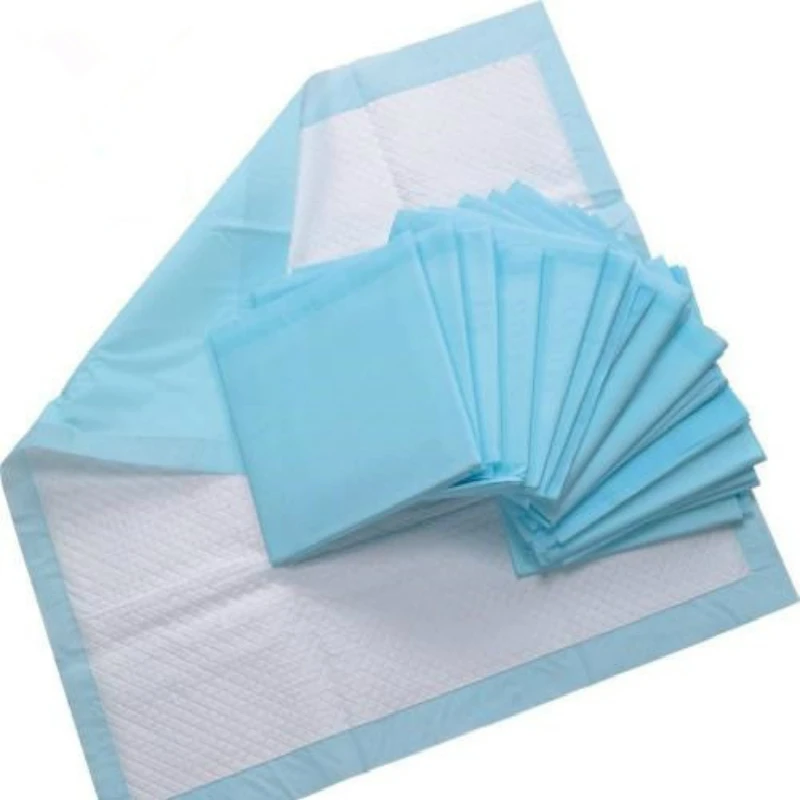
The core performance requirements for this product are efficient body fluid isolation, leak prevention, and surface dryness, which directly determine purchasing decisions by hospitals and consumers. These requirements also impose clear demands on production equipment:
· High-speed lamination for three-layer composite materials (non-woven fabric, absorbent paper and PE film)
· High-precision large-size cutting (60×90cm to 80×120cm)
· Online folding and automatic packaging systems
· Optional aseptic production and sterilization supporting devices
1.2 Adult Diapers (Maternity-Specific) Market and Equipment Overview
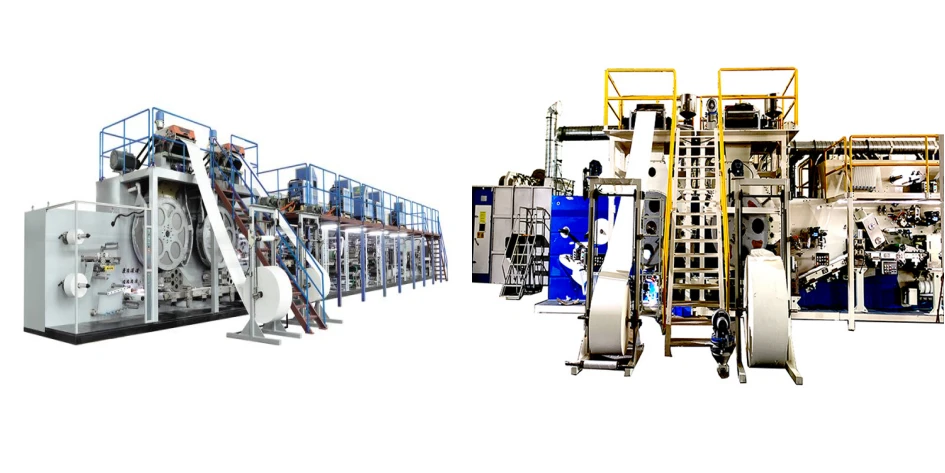
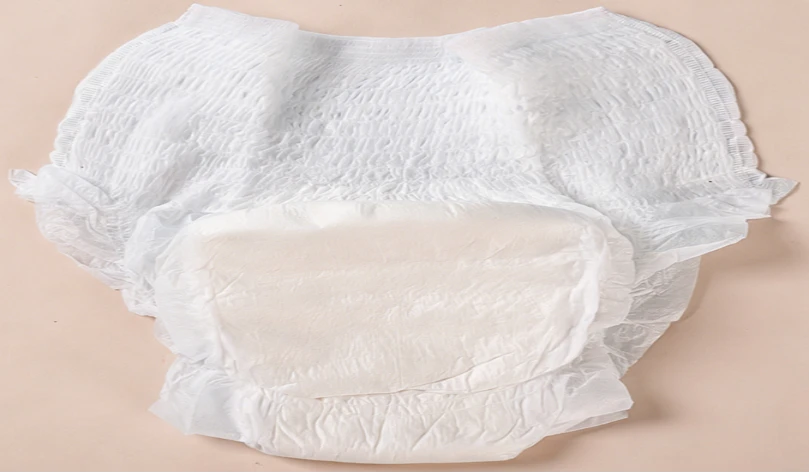
The global adult diapers market exceeded $34.8 billion in 2026, with maternity-specific diapers as a high-end segment accounting for approximately 19% of the market. This segment maintains a compound annual growth rate of 12.5%, significantly outpacing the growth of regular adult diapers. Designed specifically for postpartum women's physiological characteristics, these products have distinct technical differences from regular adult diapers and require dedicated or quick-changeover full-servo adult diaper production lines.
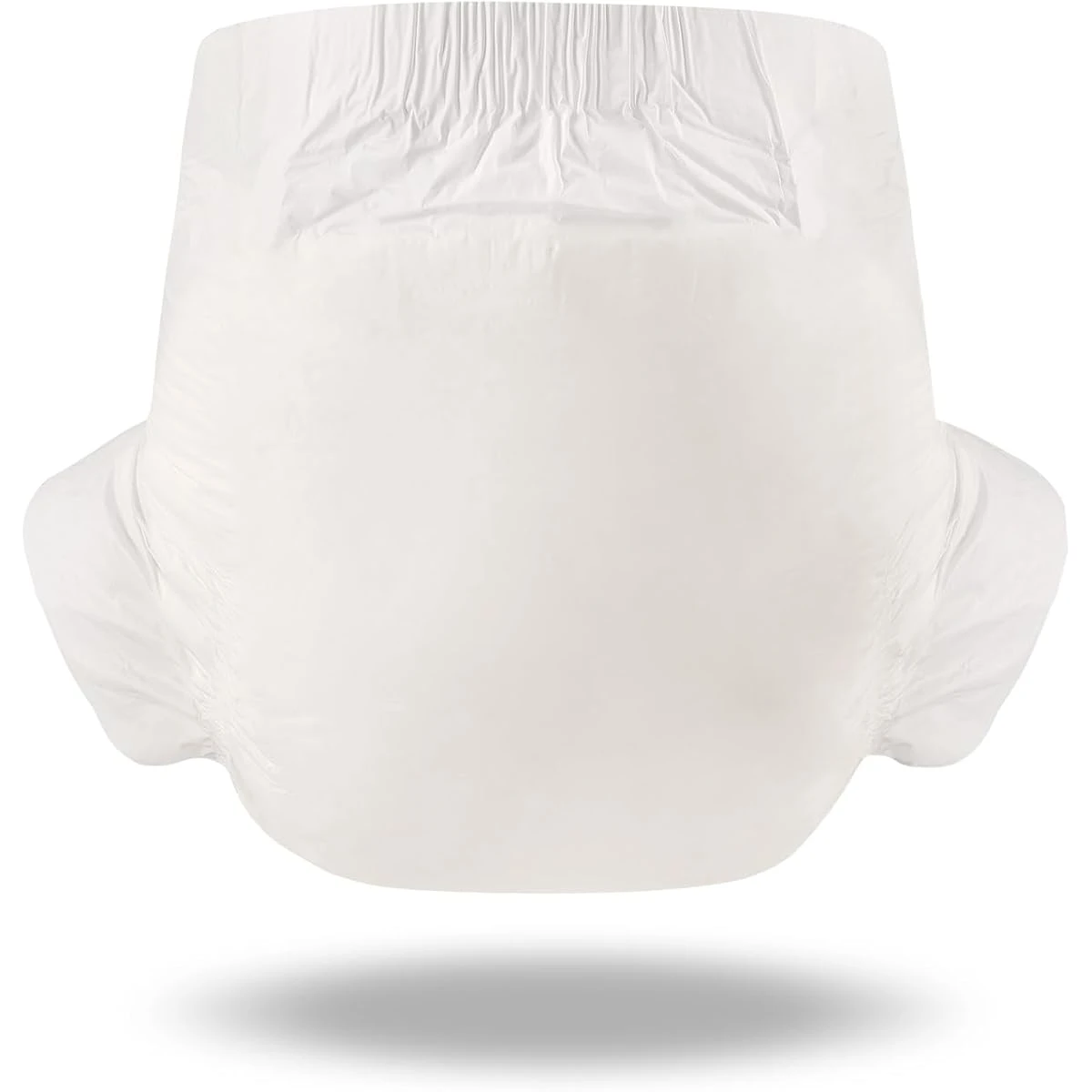
Core technical features of maternity-specific diapers:
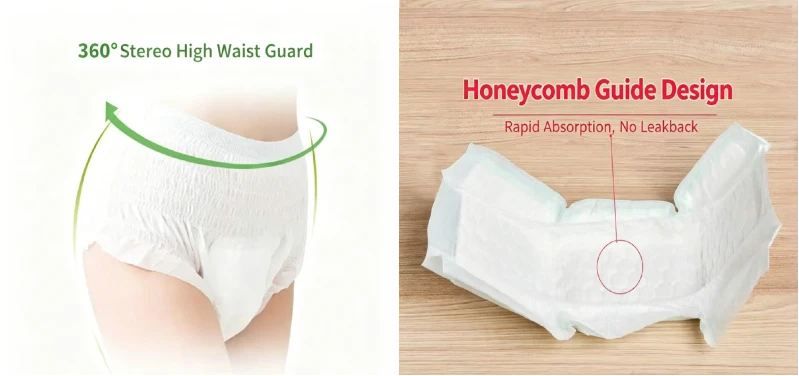
· Ultra-loose elastic waistband (adapts to postpartum abdominal changes)
· Extended absorbent core (covers to the lower back to handle large amounts of lochia)
· Pure cotton skin-friendly surface layer (reduces friction on perineal wounds)
· Three-dimensional leak guards and double leak-proof design
1.3 Complementarity of Two Categories and Production Line Configuration Strategy
For overseas manufacturers, simultaneously deploying nursing pad and adult diaper production lines is the optimal choice, covering the full cycle of maternity care needs and increasing market share:
| Comparison Dimension | Medical Nursing Pad Production Line | Adult Diaper Production Line | Combined Configuration Advantages |
| Investment Threshold | Medium-Low ($300,000-$800,000 per line) | Medium-High ($800,000-$2,000,000 per line) | High-low matching, diversifies investment risk |
| Production Speed | 150-300 pieces/minute | 80-180 pieces/minute | Complementary capacity, meets different order demands |
| Product Added Value | Medium (30% premium for medical-grade products) | High (50-80% premium for maternity-specific models) | Optimized profit structure |
| Market Demand Stability | Extremely High (hospital necessity) | High (driven by consumption upgrade) | Strong market fluctuation resistance |
2. Prenatal Admission Stage: Nursing Pad Equipment Primary, Diaper Equipment Secondary
The prenatal stage refers to the period from hospital admission to entering the delivery room, which is the core necessity scenario for Disposable Underpads. Hospitals worldwide list them as essential supplies for maternity admission.
2.1 Market Demand Characteristics and Product Specifications
· Core demand: Handling sudden amniotic fluid rupture, bloody show secretions, and prenatal examination fluids
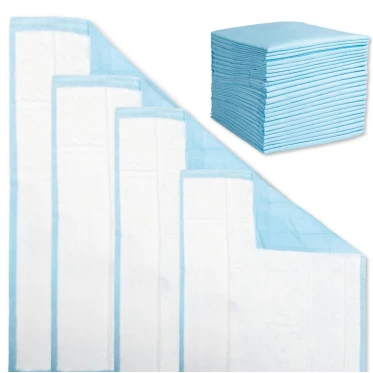
· Standard specifications: 60×90cm universal type, thickness 1.5-2.0mm, absorption capacity ≥800ml/piece
· Special requirements: 80×120cm extra-large for premature rupture of membranes, absorption capacity ≥1200ml/piece
· Sterility requirements: Must meet medical sterilization grade (ethylene oxide sterilization)
· Usage per maternity: 5-15 pieces/person
2.2 Corresponding Technical Points for Nursing Pad Production Lines
To meet market demand at this stage, nursing pad production line manufacturers should prioritize these essential features:
· Large-size cutting system: Compatible with full specifications from 60×90cm to 80×120cm
· Multi-layer lamination technology: Ensures tight bonding of non-woven fabric, absorbent core, and PE film without delamination
· Online inspection device: Real-time detection of product thickness, size, and leaks to ensure quality
· Optional aseptic packaging system: Directly produces sterilized products to meet hospital tender requirements
2.3 Supporting Demand for Diaper Production Lines
Diaper demand is low during the prenatal stage and only used in special circumstances, but equipment should still have corresponding production capabilities:
· Product specifications: Large-size maternity-specific diapers with adjustable waist range 80-120cm
· Equipment requirements: Diaper production lines should have quick-changeover functionality to switch between regular adult diapers and maternity-specific models
· Capacity configuration: Products at this stage account for approximately 10% of total demand, no need for separate production lines
3. Intrapartum Delivery Stage: Core High-Profit Market for Nursing Pad Equipment
The intrapartum stage refers to the period from entering the delivery room to the end of childbirth. It is a mandatory necessity scenario for Disposable Underpads and the highest value-added segment market. Delivery rooms in all hospitals worldwide require the use of sterile Disposable Underpads and prohibit ordinary household products.
3.1 Market Demand Characteristics and Product Specifications
· Core demand: Absorbing large amounts of amniotic fluid, blood, lochia, and meconium during delivery
· Standard specifications: 60×90cm or 80×120cm thickened type, thickness 2.0-2.5mm, absorption capacity ≥1500ml/piece
· Strict requirements: Must undergo ethylene oxide sterilization, lint-free surface, 100% waterproof leak-proof bottom layer
· Special circumstances: Postpartum hemorrhage patients may require 3-5 times the volume of ordinary maternity patients
· Usage per maternity: 3-15 pieces/person
3.2 Corresponding Technical Points for Nursing Pad Production Lines
Delivery room Disposable Underpads are the highest technical threshold products and the most profitable market. Our equipment must meet the following requirements to help customers enter this market:
· High-speed production capacity: Over 200 pieces/minute to meet hospital bulk procurement needs
· High-precision lamination process: Ensures uniform distribution of absorbent core without agglomeration
· Dust-free production environment adaptation: Equipment design meets GMP workshop requirements with no dust pollution
· Traceability system: Supports product batch management to meet medical product regulatory requirements
3.3 Important Note
Adult diapers are strictly prohibited during the entire intrapartum stage as they would block the perineum and interfere with delivery operations. Therefore, manufacturers do not need to emphasize the application of diaper production lines at this stage, but should focus on highlighting the medical-grade production capabilities of nursing pad production lines.
4. Postpartum Recovery Stage: Largest Market for Synergistic Operation of Both Production Lines
The postpartum stage refers to the period from the end of childbirth to complete lochia clearance (usually 4-6 weeks). It is the stage with the largest usage volume, most diverse product specifications, and richest consumption levels for both Disposable Underpads and diapers, accounting for over 70% of the total maternity market demand for both categories. Demand at this stage presents a distinct characteristic of "transition from medical necessity to consumption upgrade", including both hospital-mandated medical-grade products and comfort-oriented consumer products for home use. This is the core battlefield for overseas customers to maximize profits.
4.1 Postpartum 24-Hour Golden Period: Core High-Value Application Scenario for Diaper Production Lines
This is the critical period when maternity patients are weakest and completely immobile. It is also the stage with the most concentrated demand for maternity-specific diapers, highest technical threshold, and strongest premium capacity. All hospitals worldwide list diapers at this stage as standard care configuration, making it a high-end market that equipment exporters must focus on conquering.
Maternity Physiological Status and Care Pain Points
· 24 hours after vaginal delivery: Severe pain from episiotomy or laceration wounds, inability to squat, bend over, or even turn over. Any position change causes intense pain, completely unable to get out of bed to use the toilet independently
· 6 hours after cesarean section: Anesthesia effect has not subsided, lower limbs completely immobile, must lie flat absolutely, unable to urinate or defecate independently, requires indwelling catheter but may still experience urine leakage
· 6-24 hours after cesarean section: Anesthesia gradually wears off, abdominal wound pain intensifies, can only turn over slowly, first time getting out of bed requires 2-3 people assistance, extremely difficult to use the toilet
· Common characteristics: Postpartum uterine contractions cause massive bloody lochia discharge, bleeding volume can reach 50-100ml per hour, far exceeding regular menstrual volume, accompanied by large amounts of tissue fragments
Market Demand Characteristics and Product Specifications
· Core demand: Ultimate absorption capacity, leak-proof performance, and comfort, allowing for changes without moving the maternity patient
· Standard product specifications:
o Extra-large XL/XXL sizes, adjustable waist range 85-130cm, adapts to postpartum abdominal swelling
o Absorption capacity ≥600ml/piece (regular adult diapers only 400ml), can handle 3-4 hours of lochia volume
o Core length ≥42cm, extending from abdomen to lower back, completely covering lochia discharge area
o Three-dimensional leak guard height ≥5cm, double leak-proof edge design to prevent side and back leaks
· High-end product specifications:
o Pure cotton hot air non-woven surface layer, added aloe vera essence or vitamin E to reduce friction and irritation on perineal wounds
o Perforated non-woven fabric diversion layer accelerates liquid penetration and keeps surface dry
o Velcro made of soft non-woven material to avoid scratching maternity skin
o Wetness indicator for convenient timely replacement by nursing staff
· Usage per maternity: 3-5 pieces/day, with cesarean section patients reaching 5-7 pieces/day
Corresponding Equipment Technical Points
To meet the high-end product demand at this stage, adult diaper production line manufacturers should integrate these core technologies:
· Full-servo independent control system: Each station is individually servo-driven, ensuring product dimensional accuracy within ±1mm and absorbent core distribution uniformity ≥95%
· Adjustable elastic waistband stretching mechanism: Real-time adjustment of waistband stretching ratio during production to adapt to body type differences of maternity patients in different countries and regions
· Double-layer three-dimensional leak guard forming device: Adopts independent rubber band tension control system to ensure consistent guard height that automatically stands up when standing
· Pure cotton surface layer lamination technology: Supports lamination of various skin-friendly materials such as pure cotton hot air non-woven fabric and spunlace non-woven fabric, with lamination strength ≥3N/5cm
· Quick mold change system: Completes switching between different size products within 30 minutes to meet hospital small-batch multi-batch order demands
· Online quality inspection system: Real-time detection of product weight, size, leaks, and Velcro adhesion, with defect rate maintained below 0.3%
Market Value
Products at this stage have the highest profit margin in the entire maternity care market. The ex-factory price of medical-grade maternity-specific diapers is 60-100% higher than regular adult diapers, with large hospital procurement volumes and stable payment cycles, serving as a stepping stone for overseas customers to enter the medical market.
4.2 Hospital Recovery Period: Equipment Demand During Product Transition Stage
The hospital recovery period refers to the period from 24 hours postpartum to discharge (3-5 days for vaginal delivery, 5-7 days for cesarean section). It is a transition stage with rapidly changing product demands. As maternity patients gradually recover and mobility improves, product demand shifts from high-absorption diapers to lightweight sanitary napkins, while Disposable Underpads maintain stable high demand.
Maternity Physiological Status and Care Changes
· 24-72 hours after vaginal delivery: Perineal wound pain gradually decreases, can get out of bed to use the toilet with assistance, but still has difficulty squatting and standing up, lochia volume remains large
· 3-5 days after vaginal delivery: Wounds basically healed, can move independently, lochia volume significantly reduced, transitioning from bloody lochia to serous lochia
· 24-48 hours after cesarean section: Catheter removed, can attempt to get out of bed, but abdominal wound still has obvious pain, intensified when coughing or turning over
· 3-7 days after cesarean section: Wounds gradually healing, can use the toilet independently, but movement is still relatively slow, lochia duration is longer than vaginal delivery
Market Demand Characteristics and Product Specifications
· Nursing pad demand:
o Maintains stable high demand, Disposable Underpads must be laid on hospital beds throughout regardless of whether the maternity patient can get out of bed
o Standard specifications: 60×90cm universal type, thickness 1.8-2.2mm, absorption capacity ≥1000ml/piece
o Special requirements: Cesarean section patients need wound exudate absorption function, some high-end products add antibacterial ingredients
o Usage per maternity: 3-5 pieces/day for vaginal delivery, 5-7 pieces/day for cesarean section
· Diaper demand:
o Gradually decreases, starting to reduce 24 hours after vaginal delivery and 24 hours after cesarean section
o Products transition from thickened to lightweight types, absorption capacity ≥400ml/piece is sufficient
o mainly used during nighttime sleep and hospital examinations, gradually replaced by maternity sanitary napkins during the day
o Usage per maternity: 1-2 pieces/day for vaginal delivery, 2-3 pieces/day for cesarean section
· Emerging demands:
o Disposable maternity pants: Products between diapers and underwear, more convenient to wear and more comfortable
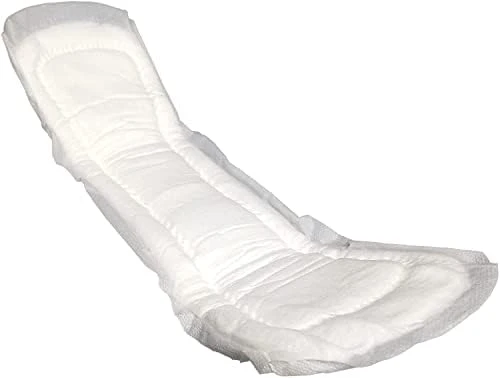
o Metering-type maternity sanitary napkins: Can accurately measure lochia volume to help doctors judge postpartum hemorrhage
Corresponding Equipment Technical Points
The demand characteristics at this stage require production lines to have extremely strong flexibility and multi-variety production capabilities:
· Nursing pad production lines:
o Have multi-thickness production capability, can freely adjust product thickness between 1.2-2.5mm
o Support quick switching of different gram weight absorbent cores to meet different absorption capacity requirements
o Optional antibacterial agent spraying device to produce high-end Disposable Underpads with antibacterial function
o Online folding system can produce products with various folding methods to meet different packaging requirements
· Diaper production lines:
o Can quickly switch between thickened and lightweight product production, adjustment time not exceeding 20 minutes
o Support production of derivative products such as maternity pants and metering-type sanitary napkins to improve equipment utilization
o Can adjust absorbent core length and width to produce products of different specifications
o Optional breathable bottom layer lamination device to improve product breathability
Market Value
Products at this stage have large and stable demand, forming the basis for overseas customers to achieve large-scale production and profitability. Meanwhile, providing a diversified product portfolio helps customers establish a complete product line and increase customer loyalty.
4.3 Discharge Home Period: Equipment Configuration and Value Extension for Long-Tail Market
The discharge home period refers to the period from discharge to complete lochia clearance (1-6 weeks postpartum). It is a long-tail market where product demand shifts from medical-grade to consumer-grade. Although usage per maternity decreases, the market base is huge, and production lines can also manufacture standard household Disposable Underpads and adult diapers, helping customers expand into broader consumer markets.
Maternity Physiological Status and Lifestyle Changes
· 1-2 weeks postpartum: Maternity patients basically recover mobility but are still relatively weak, lochia volume further decreases, transitioning from serous lochia to white lochia
· 2-4 weeks postpartum: Maternity patients basically recover physically, can perform daily activities but still need rest, lochia volume significantly reduced
· 4-6 weeks postpartum: Lochia basically cleared, maternity patients fully recover physically, can resume normal life and work
· Lifestyle characteristics: Home-based care, higher requirements for product comfort, convenience, and cost-effectiveness, brand loyalty gradually forms
Market Demand Characteristics and Product Specifications
· Nursing pad demand:
o Still has stable demand in 1-2 weeks postpartum, mainly used during nighttime sleep and rest
o Product specifications mainly 60×90cm universal type, some consumers choose smaller 45×60cm products
o Higher requirements for product breathability and softness, demand for medical-grade products gradually decreases
o Usage per maternity: 10-20 pieces, basically discontinued after 2 weeks postpartum
· Diaper demand:
o Demand significantly reduced, only used temporarily for heavy nighttime lochia or when restroom access is inconvenient. Products are mainly lightweight types, absorption capacity ≥300ml/piece is sufficient
o Some consumers choose to use large-size maternity sanitary napkins instead of diapers
o Usage per maternity: 0-7 pieces, basically discontinued after 2 weeks postpartum
· Extended demands:
o Breast pads: Used during peak postpartum lactation, with huge market demand
o Disposable pure cotton underwear: Used with maternity sanitary napkins, convenient and hygienic
o Baby changing pads: Basically the same production process as adult Disposable Underpads, can share production lines
Corresponding Equipment Technical Points
The product characteristics at this stage require production lines to have low cost, high efficiency, and multi-purpose features:
· Nursing pad production lines:
o High-speed production capacity, 250-300 pieces/minute, reducing unit production cost
o Compatible with production of various products such as adult Disposable Underpads, baby changing pads, and pet pads
o Support lamination of different material bottom layers to produce products of different grades
o Automated packaging system to reduce labor costs
· Diaper production lines:
o Can quickly switch between production of adult diapers, maternity sanitary napkins, breast pads, and other products
o Have small-batch production capability to meet demands of different market segments
o Optional ultra-thin core production technology to produce lightweight and comfortable products
o Support personalized packaging design to meet different brand requirements
Market Value
Although products at this stage have lower profit margins than medical-grade products, they have a huge market scale and long consumption cycle, serving as an important guarantee for overseas customers to achieve long-term stable profitability. Meanwhile, producing multiple derivative products through shared production lines can significantly improve equipment utilization and reduce investment risks.
4.4 Impact of Vaginal Delivery vs. Cesarean Section Demand Differences on Production Line Configuration
Cesarean section rates vary significantly across countries and regions, directly affecting the demand ratio and product structure of the two categories. Manufacturers must fully consider this factor when planning production capacity for customers:
| Product Category | Total Usage per Vaginal Delivery Maternity | Total Usage per Cesarean Section Maternity | Equipment Configuration Recommendations for High Cesarean Rate Regions |
| Disposable Underpads | 20-30 pieces | 40-50 pieces | Increase nursing pad production line capacity share to 60%, increase production time for thickened products |
| Adult Diapers | 5-8 pieces | 10-15 pieces | Increase production time for maternity-specific models on diaper production lines, configure more large-size molds |
| Derivative Products | 15-20 pieces | 25-30 pieces | Increase production capacity for disposable maternity pants and metering-type sanitary napkins |
Global cesarean section rate reference: Global average cesarean section rate is approximately 21%, China about 35%, United States about 32%, Brazil about 56%, Italy about 38%, Turkey about 48%. Countries with high cesarean section rates have 40-60% higher total demand for Disposable Underpads and diapers than countries with low cesarean section rates, making them key target markets for equipment exports.
5. International Market Compliance Requirements and Equipment Certification
When exporting maternity care product production equipment, it is essential to ensure that the equipment can help customers meet product compliance requirements in target markets, which is the key to successful equipment sales:
1. General standards: All products must comply with ISO 9001 quality management system standards, medical-grade products must comply with ISO 13485 medical device quality management system standards
2. EU market: Must pass CE certification, products implement EN 13726-2 standard (disposable medical dressings)
3. US market: Must pass FDA registration, products implement 21 CFR Part 880 standard
4. Chinese market: Implement GB 15979-2002 "Hygienic Standard for Disposable Sanitary Products"
5. Equipment requirements: our production lines should have complete quality control and recording systems that can provide traceability data for product production processes, helping customers successfully pass the above certifications
6. Core Selling Points and Return on Investment Analysis for Equipment Export
When promoting our production lines to overseas customers, we should focus on the following core advantages:
1. Full cycle coverage capability: One production line can produce all specifications of products required for maternity prenatal, intrapartum, and postpartum care
2. High automation level: Reduces labor costs, improves production efficiency, and lowers defect rates
3. Quick changeover technology: Completes switching between different specifications within 15-30 minutes to meet small-batch multi-variety order demands
4. Medical-grade production capability: Can directly produce sterilized products that meet international standards, helping customers enter the high-profit hospital market
5. Energy-saving design: 15-20% more energy-efficient than similar equipment, reducing customer operating costs
Return on investment reference: A medium-configured nursing pad production line (200 pieces/minute) has an annual capacity of approximately 120 million pieces. Calculated at a net profit of $0.02 per piece, the annual net profit is approximately $2.4 million, with an investment payback period of about 1-2 years. A medium-configured adult diaper production line (120 pieces/minute) has an annual capacity of approximately 50 million pieces. Calculated at a net profit of $0.08 per piece, the annual net profit is approximately $4 million, with an investment payback period of about 1.5-2.5 years.