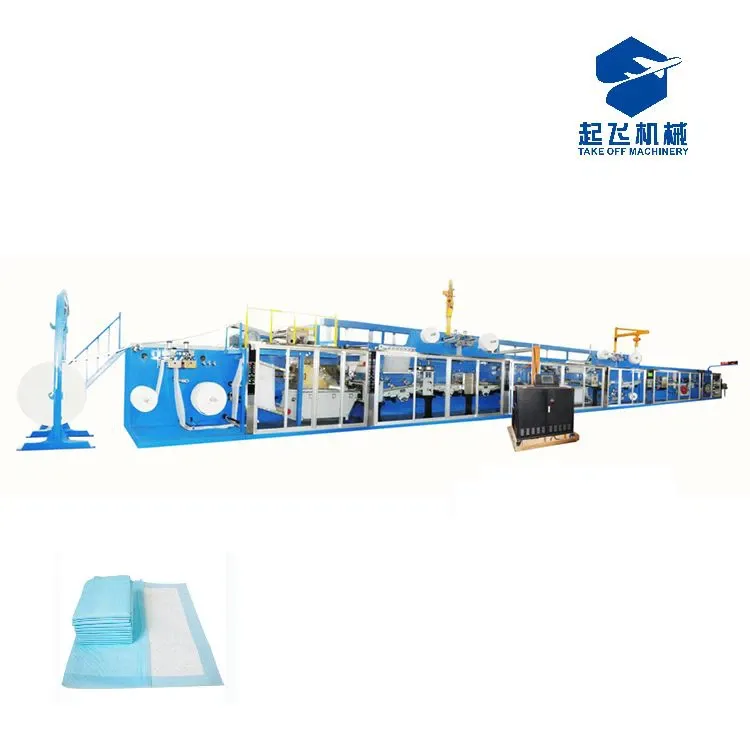
Figure 1: TO-BKA series full-servo multi-functional underpad machine with modular design, capable of producing 6+ types of disposable absorbent pads
When entering the $318.9 billion global disposable hygiene market (Grand View Research, 2025), many new investors face a critical decision: buy separate specialized machines for each product or invest in a single multi-functional underpad machine.
While dedicated machines have their place for high-volume single-product production, 68% of new disposable hygiene manufacturers (Industry Report, 2026) now prefer multi-functional equipment. Why? Because it allows them to produce 6+ different types of disposable absorbent pads with just one machine, switching between products in as little as 2-4 hours without major mechanical modifications.
In this comprehensive guide, we will detail all products you can manufacture with a modern underpad machine, how industry-leading digital specification conversion technology works, and a complete ROI comparison to help you make the right investment decision.
Why Specification Conversion Capability Is Your Core Competitive Advantage
Before diving into the product list, let's understand why flexible production has become essential for modern manufacturers:
Maximize equipment utilization: Run your machine 24/7 producing different products instead of leaving it idle during slow seasons
Reduce initial investment: One machine replaces 3-4 specialized units, cutting capital expenditure by 60-70% for multi-product manufacturers
Respond quickly to market changes: Shift production to high-demand products in hours, not weeks
Expand customer base: Serve multiple industries (medical, maternity, baby care, pet care) with a single production line
Lower inventory costs: Produce smaller batches of multiple products instead of large inventories of a single item
6+ Products You Can Manufacture With One Multi-Functional Underpad Machine
All products below can be produced on the same standard multi-functional underpad machine by simply changing cutting size, raw material specifications and production parameters. No major mechanical modifications are required.
Advanced equipment supports an industry-leading product size range: length 350-1800mm, width 300-600mm, with customizable thickness to meet all market demands.
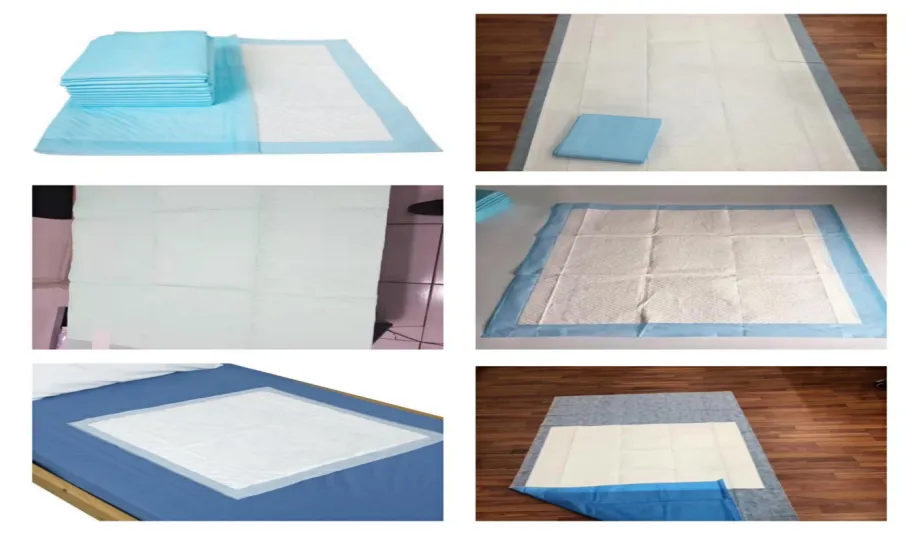
Figure 2: Full range of underpad products from 33×45cm to 90×180cm, covering adult, maternity, baby, medical and pet applications
1. Adult Incontinence Pads / Adult Underpads
Market Size: $28.7 billion globally (2025), 6.8% CAGR (Statista, 2025)
Common Sizes: 60×90cm, 70×120cm, 80×150cm, 90×180cm
Specification Conversion Time: 2-3 hours
Adult underpads are the highest-volume product for most underpad machine owners. With the global population aging rapidly, demand for these products is skyrocketing. The machine can produce all grades from economy to premium, with absorbency ranging from 500ml to 3000ml.
Conversion Notes: Adjust cutting length and width via touchscreen, servo-control SAP application rate, and modify PE film thickness. Full-servo system ensures precise material tension control for consistent product quality.
2. Maternity Pads / Postpartum Pads
Market Size: $12.3 billion globally (2025) (Market Research Future, 2025)
Common Sizes: 40×60cm, 60×90cm, 90×120cm
Specification Conversion Time: 1.5-2.5 hours
Maternity pads are high-margin products with stable demand. Compared to standard underpads, they require softer nonwoven top sheets and higher absorbency. The machine can produce disposable maternity pads and waterproof bed protectors for hospitals and home use.
Conversion Notes: Switch to softer air-through nonwoven top sheet, increase SAP content, and add embossing patterns for better liquid distribution. Recipe storage system saves up to 50 different product configurations for one-click recall.
3. Baby Changing Pads / Infant Underpads
Market Size: $15.6 billion globally (2025) (Grand View Research, 2025)
Common Sizes: 30×45cm, 45×60cm, 60×90cm
Specification Conversion Time: 1.5-2 hours
Baby changing pads are a fast-growing segment, especially in emerging markets. They require hypoallergenic materials and cute printed designs. The machine supports full-color printing on PE films, allowing you to create attractive products that stand out in retail stores.
Conversion Notes: Install optional printing unit, adjust cutting size, and use thinner, softer materials. Digital cutting system ensures ±0.5mm precision for perfect edge quality.
4. Medical Disposable Underpads / Surgical Pads
Market Size: $19.2 billion globally (2025), 7.2% CAGR (WHO, 2025)
Common Sizes: 40×60cm, 60×90cm, 90×150cm, 100×200cm
Specification Conversion Time: 2-3.5 hours
Medical underpads are the highest-margin product category. They require strict quality control and often need to meet ISO 13485 medical device standards. The machine can produce sterile surgical pads, operating table covers and wound care pads with reinforced edges.
Conversion Notes: Add SMS nonwoven layer for bacterial barrier, increase adhesive application for better edge sealing, and enable online sterilization indicator printing. Advanced equipment achieves ≥98% finished product rate, meeting the strictest medical quality requirements.
5. Pet Training Pads / Puppy Pads
Market Size: $8.9 billion globally (2025), fastest-growing segment (9.3% CAGR) (American Pet Products Association, 2025)
Common Sizes: 33×45cm, 45×60cm, 60×90cm, 90×120cm
Specification Conversion Time: 1-2 hours
Pet training pads are the fastest-growing product in the disposable hygiene industry. Compared to human hygiene products, they have lower material requirements and higher profit margins. The machine can produce all types of pet pads, including scented pads, attractant-infused pads and extra-large pads for large dogs.
Conversion Notes: Reduce SAP content compared to medical pads, add optional attractant coating system, and adjust production speed to 180-220 pieces per minute. High-end models can reach up to 300 meters per minute linear speed for maximum pet pad production capacity.
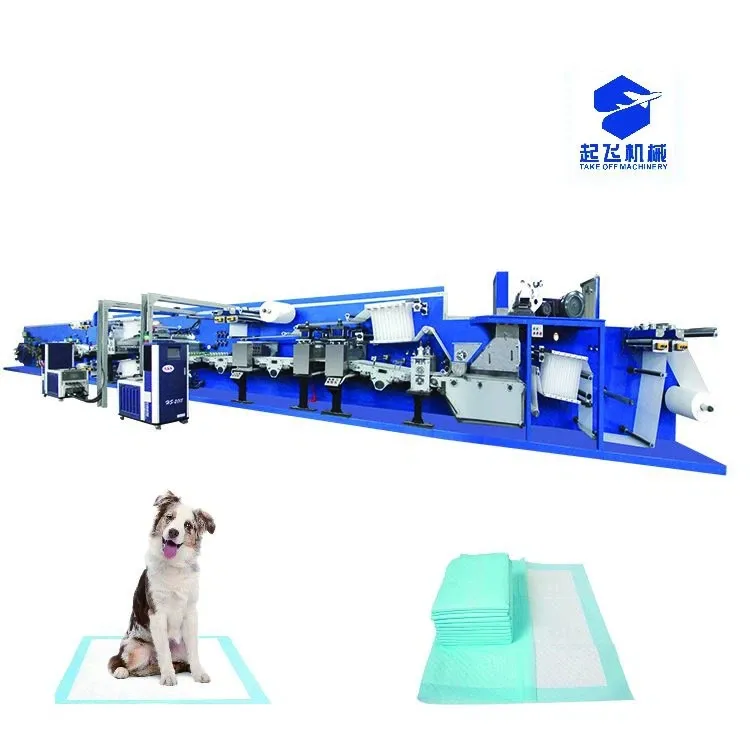
Figure 3: Pet training pad production line with high-speed operation capability
6. General Purpose Disposable Absorbent Pads
In addition to the above main products, the multi-functional underpad machine can also produce:
Disposable table covers for restaurants and hotels
Automotive absorbent pads for oil spills
Industrial absorbent pads for chemical spills
Funeral home disposable pads
Camping and travel disposable bed sheets
Specification Conversion Time: 1-3 hours depending on product type
Industry-Leading Digital Quick Specification Conversion Technology
The biggest difference between advanced multi-functional underpad machines and traditional equipment is the digital quick-change system that minimizes downtime during product switches:
|
Feature |
Advanced Multi-Functional Underpad Machine |
Traditional Single-Function Machine |
|
Standard size change time |
2-4 hours |
8-24 hours |
|
Number of operators required |
2 |
4-6 |
|
Need for mechanical cutting |
No (digital adjustment) |
Yes (manual cutting and welding) |
|
Production speed after change |
Same as original |
10-20% reduction |
|
Waste during changeover |
<50 pieces |
200-500 pieces |
|
Product size range |
350-1800mm × 300-600mm |
400-1200mm × 400-800mm |
|
Recipe storage capacity |
50+ |
10-20 |
Core Technical Features of Advanced Equipment
100% digital size adjustment: Change cutting length and width via 10-inch touchscreen without replacing any parts
Quick roll change system: Raw material roll change time less than 5 minutes with automatic tension control
Intelligent recipe management: Save up to 50 different product recipes for one-click recall
Automatic parameter synchronization: Machine automatically adjusts temperature, speed and tension based on selected product
Full-servo drive system: All key stations driven by independent servo motors for precise control and fast response
Mainstream Underpad Machine Model Technical Parameters
Currently, mainstream multi-functional underpad machines on the market are divided into three standard grades to meet different production capacity and budget requirements:
|
Model Grade |
Max Width |
Linear Speed |
Drive Mode |
Power |
Best For |
|
High-end Full-Servo |
600mm |
300 m/min |
Full-servo |
175KW |
High-volume production, medical-grade products |
|
Wide Full-Servo |
800mm |
250 m/min |
Full-servo |
195KW |
Extra-large products, high capacity needs |
|
Entry Semi-Servo |
600mm |
200 m/min |
Semi-servo |
145KW |
Entry-level investment, cost-effective |
All mainstream models feature:
≥98% finished product rate (excluding glue and splicing waste)
CE and ISO certification for global market access
1100L/min air consumption at 6-8 BAR
380V 50HZ standard power supply (customizable for different regions)
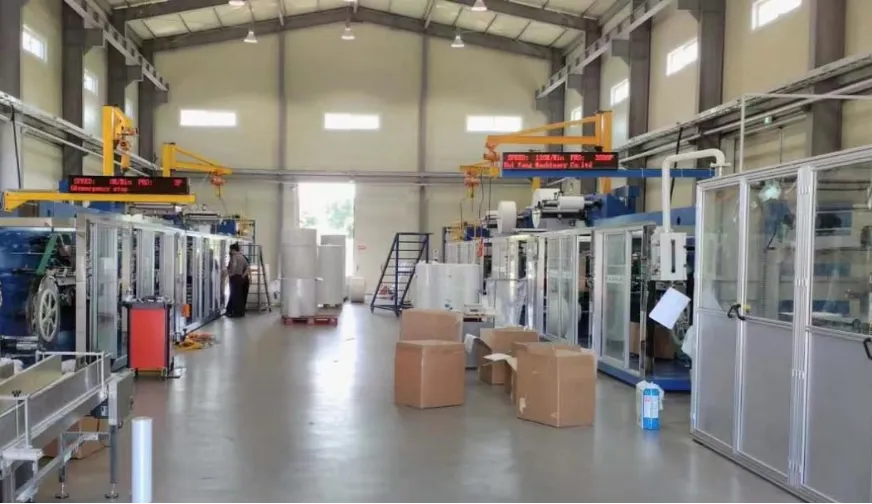
Figure 4: Underpad machine operating in a modern production workshop with fully enclosed safety protection
Comprehensive ROI Comparison: Multi-Functional vs. Traditional Single-Function Machines
(Based on 2026 global disposable hygiene market average data, including full lifecycle cost and long-term value analysis)
Many investors only focus on initial purchase cost when buying equipment, ignoring full lifecycle operating costs, capacity utilization differences and long-term risk resistance. In fact, the ROI gap between multi-functional underpad machines and traditional single-function machines goes far beyond the surface price difference.
Important Precondition
The following comparison applies to manufacturers planning to produce 3 or more different types of absorbent pads. If you only plan to produce one product with stable high-volume demand, a dedicated single-function machine may be a more cost-effective choice.
1. Explicit Initial Investment Cost Comparison
|
Investment Item |
Option 1: 3 Traditional Single-Function Machines |
Option 2: 1 High-end Full-Servo Multi-Functional Underpad Machine |
Difference |
|
Adult underpad special machine |
$95,000 |
- |
- |
|
Pet pad special machine |
$85,000 |
- |
- |
|
Medical underpad special machine |
$105,000 |
- |
- |
|
Multi-functional underpad machine (TO-BKA-600) |
- |
$135,000 |
- |
|
Total Initial Investment |
$285,000 |
$135,000 |
Save $150,000 (53%) |
|
Average equipment utilization |
40-50% |
85-95% |
Increase by 40-50 percentage points |
|
Annual basic capacity |
~12 million pieces |
~25 million pieces |
Increase by 108% |
|
Annual revenue |
$320,000 |
$480,000 |
Increase by $160,000 (50%) |
|
Static Payback Period |
2.7-3.2 years |
1.1-1.4 years |
Shorten by 1.6-1.8 years |
2. Implicit Operating Cost Comparison
Initial investment is just the tip of the iceberg of total cost. The gap in long-term operating costs is the key to determining final profit. Calculated based on 20 hours of operation per day and 300 days of operation per year:
Factory Rent Cost: 3 single-function machines occupy about 420㎡ total, while 1 multi-functional machine occupies about 150㎡. Annual rent savings: $38,880
Labor Cost: 3 single-function machines require 6 operators, while 1 multi-functional machine only requires 2 operators. Annual labor cost savings: $120,000
Equipment Maintenance Cost: Annual maintenance cost for 3 different models is about $14,250/year, while for 1 multi-functional machine it's about $4,050/year. Annual maintenance cost savings: $10,200
Energy Consumption Cost: Total power of 3 single-function machines is about 450KW, while TO-BKA-600 multi-functional machine power is 175KW. Annual electricity savings: $165,000
Spare Parts Inventory Cost: 3 different models require 3 sets of independent spare parts ($30,000), while 1 multi-functional machine requires only 1 set ($10,000). One-time spare parts investment savings: $20,000
Comprehensive Calculation: Just in terms of implicit operating costs, the multi-functional machine can save $334,080 per year compared to 3 single-function machines.
3. Revenue Capacity Differences
The $480,000 annual revenue of the multi-functional machine comes from multiple advantages brought by its unique production flexibility:
Double Equipment Utilization: Multi-functional machines can switch to other high-demand products during off-seasons
Perfect Complementation of Multi-Category Off-Seasons: Different products have staggered demand cycles
Cross-Selling Opportunities: Provide one-stop procurement services to customers
Flexible Product Structure Adjustment: Increase production proportion of high-margin products in real time
4. Market Risk Resistance Comparison
Multi-functional machines build a production platform that diversifies risks:
Market Volatility Risk: Quickly switch to other high-profit products if one market declines
Regulatory Risk: Easily adapt to new environmental requirements by adjusting raw materials
Order Structure Risk: Handle small-batch multi-variety orders with minimum order quantity as low as 5,000 pieces
Frequently Asked Questions (FAQ)
Q1: How long does it actually take to switch between products?
A: The 2-4 hour conversion time refers to experienced operators with pre-prepared raw materials and saved product recipes. For new operators or when switching to products requiring optional configurations (like printing or attractant coating), the time may be slightly longer.
Q2: Is the quality of products from a multi-functional machine the same as from a dedicated machine?
A: Yes. Modern full-servo multi-functional machines produce products of the same quality as dedicated machines. The only difference is that dedicated machines may have slightly higher production speeds for a single specific product.
Q3: What optional configurations are available for multi-functional underpad machines?
A: Common optional configurations include:
Full-color printing unit
Attractant coating system for pet pads
SMS nonwoven layer application for medical pads
Sterilization indicator printing
Automatic packaging line integration
Q4: What is the lifespan of a multi-functional underpad machine?
A: With proper maintenance, a high-quality full-servo multi-functional underpad machine can last 10-15 years. Modular design allows for easy upgrades and component replacement to extend its service life.
Q5: Can the machine be customized for specific regional power requirements?
A: Yes. All our machines can be customized to meet different regional power standards, including 220V, 415V, 440V and 480V, as well as 50Hz or 60Hz frequencies.
Conclusion: Investing in Flexibility Is Investing in the Future
In today's fast-changing global market, flexibility has become the most valuable core asset for manufacturers. While traditional single-function machines may be suitable for high-volume single-product production, they bind enterprises to a single market and cannot respond quickly to changes.
The multi-functional underpad machine equipped with digital specification conversion technology integrates the production capacity of 6+ products through one machine, not only saving 53% of initial investment for multi-product manufacturers, but also saving more than $300,000 in annual operating costs and shortening the payback period to 1.1-1.4 years.
More importantly, it builds a flexible, risk-resistant and expandable production platform for enterprises, allowing you to enter multiple high-growth markets and adapt to future industry trends.
Ready to learn more about how a multi-functional underpad machine can benefit your business? Contact our experts today for a free consultation and customized quotation. You can also download our detailed product brochure to learn more about technical specifications and customer success stories.