In the burgeoning pet care market, the demand for high - quality pet pads has been on a continuous rise. As a supplier of Pet Pad Machines, I often encounter a crucial question from our clients: Can a Pet Pad Machine produce pet pads for different pets, such as cats and dogs? This blog post aims to delve deeply into this topic, exploring the feasibility, challenges, and solutions associated with creating pet pads for various furry friends using a single machine.
Understanding the Basics of Pet Pad Machines
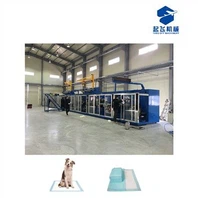
Before we address the main question, it's essential to have a clear understanding of how a Pet Pad Machine functions. Our company offers a range of advanced machines, including the Puppy Training Pads Machine. These machines are essentially automated production lines designed to transform raw materials like non - woven fabrics, absorbent polymers, and release papers into functional pet pads.
The general process starts with the unwinding of raw materials. They are then cut, layered, and heat - sealed according to specific patterns and dimensions. Finally, the finished pet pads are rolled or stacked, ready for packaging and distribution.
Similarities in Cat and Dog Pad Requirements
When it comes to the fundamental requirements of pet pads for cats and dogs, there are several similarities. Firstly, both types of pads need to have excellent absorbency. Whether it's a dog's larger volume of urine or a cat's more frequent but smaller urinations, the pad should be able to quickly soak up the liquid and lock it in to prevent leakage onto the floor.
Secondly, odor control is crucial. Pets' urine can emit a strong and unpleasant smell, which can be a nuisance in a living environment. High - quality pet pads for both cats and dogs are expected to have odor - neutralizing properties, often achieved through the use of special additives or activated carbon layers.
In terms of size and shape, while there are variations, many standard pet pad machines can be adjusted to produce a range of sizes. For example, a medium - sized pad can be suitable for both small dogs and cats. This flexibility allows manufacturers to use the same machine to cater to different market segments.
Differences in Cat and Dog Pad Requirements
Despite the similarities, there are also significant differences in the requirements for cat and dog pads. One of the most obvious differences is size. Dogs, especially larger breeds, typically require bigger pads to accommodate their larger body size and urine volume. On the other hand, cat pads can be smaller in general, as cats are usually smaller animals.
Another difference lies in the surface texture. Dogs may be more forgiving of different surface textures, as long as the pad is absorbent. However, cats are known for their fastidious nature. They prefer pads with a smooth and soft surface, similar to the feeling of sand. If the pad has a rough or scratchy texture, cats may be less likely to use it.
Moreover, the design requirements might vary. Dog pads may sometimes come with anti - slip backs to prevent them from sliding around on smooth floors, especially when dogs move around briskly. In contrast, cat pads may be designed with features to prevent the scattering of litter, as cats tend to scratch and dig in the pads after using them.
Can a Single Machine Produce Pads for Both Cats and Dogs?
The answer is yes, a well - designed Pet Pad Machine can indeed produce pet pads for different pets. Modern machines, such as our Disposable Dog Pad Making Machine, are highly flexible and adjustable.
For size adjustments, most advanced machines are equipped with cutters and sensors that can be easily programmed to change the cutting length and width. This allows manufacturers to switch between producing cat - sized and dog - sized pads efficiently.
In terms of surface texture, some machines can integrate additional processes. For example, a manufacturer can add a softening or smoothing process to create the smooth surface preferred by cats. This can be achieved through techniques like heat - treatment or the application of a softening agent during the production process.
Regarding design features, machines can be customized to add specific elements. For anti - slip backs on dog pads, the machine can be outfitted with a mechanism to apply an anti - slip layer. And for cat pads with anti - litter - scattering features, special embossing or folding processes can be incorporated into the machine's operation.


Challenges and Solutions
However, producing pet pads for different pets using a single machine also presents some challenges. One of the main challenges is the changeover time between different pad types. Switching from producing dog pads to cat pads may require adjustments to the machine settings, replacement of cutting blades, and cleaning to ensure no cross - contamination of materials.
To address this challenge, our company has developed quick - change systems for our machines. These systems allow for rapid adjustments of machine settings, minimizing the downtime between production runs of different pad types. Additionally, modular designs are incorporated into the machines, making it easier to replace specific components without complex disassembly.
Another challenge is the cost - effectiveness of producing different types of pads. Customizing the production process for different pets may increase the production cost. To tackle this, we recommend efficient production planning. Manufacturers can group orders for similar pad types together to reduce the frequency of machine adjustments. Also, by using high - quality and cost - effective raw materials, the overall production cost can be controlled.
Other Related Machines and Their Roles
In addition to Pet Pad Machines, we also offer other related machines, such as the Automatic Pillow Case Making Machine. Although it may seem unrelated at first glance, this machine showcases our company's expertise in automated manufacturing processes. The technology and precision used in the Automatic Pillow Case Making Machine can be applied and adapted to the development and improvement of Pet Pad Machines.
Conclusion
In conclusion, a Pet Pad Machine can definitely produce pet pads for different pets, including cats and dogs. With the right machine design, flexibility, and well - thought - out production strategies, manufacturers can efficiently meet the diverse needs of the pet market. Our company, as a leading supplier of Pet Pad Machines, is committed to providing high - quality, customizable, and efficient solutions to help our clients succeed in the pet care industry.
If you are interested in our Pet Pad Machines, their capabilities to produce pads for different pets, or would like to discuss your specific production requirements, please feel free to reach out to us. We are eager to engage in procurement discussions and help you find the perfect machine for your business.
References
- Industry reports on pet care product manufacturing
- Technical documentation of our Pet Pad Machines
- Research on pet behavior and preferences related to pet pads